Benchmark OEM/ODM Production Showcase
Explore production-tested silhouettes designed for agile brand scalability, engineered with high-tension Italian recycled polyamides, low-friction flatlocking, and high-definition botanical color dispersion.
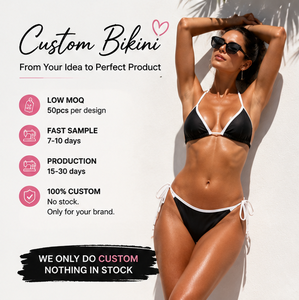
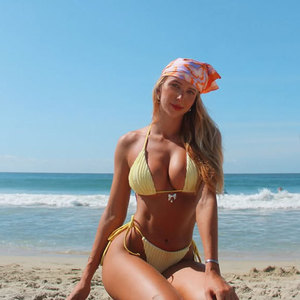
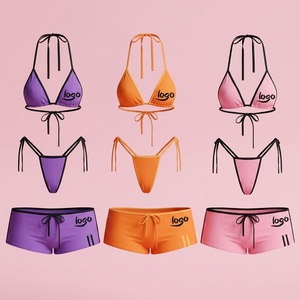

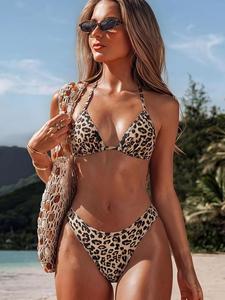
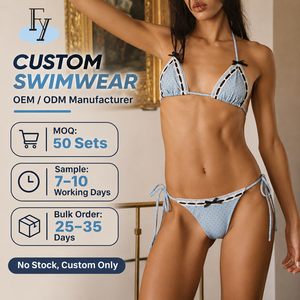
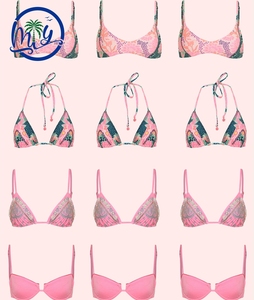
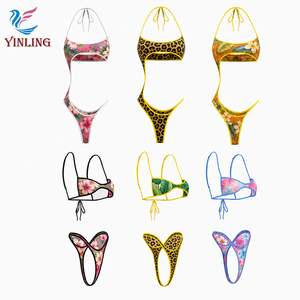
The Global Landscape of Floral Bikini Manufacturing: Why China Dominates Technical Execution
Floral swimwear presents an exceptional challenge within technical performance apparel. Unlike plain-dyed knitwear, botanical prints demand multi-axis stretch registration, chromatic pigment retention against chemical oxidizers, and millimetric pattern placement across curved anatomical panels. For international resort brands, direct-to-consumer apparel startups, and multi-door department store buyers, finding a vetted China floral bikini factory goes far beyond mere labor cost arbitrage. It is an exercise in rigorous chemical compliance, mechanical stability, and engineering agility.
China's maritime textile belt—spanning Guangdong, Zhejiang, and Fujian provinces—has systematically transformed from volume-driven cut-make-trim (CMT) workshops into highly integrated textile technology clusters. By combining high-gauge warp-knitting technology (e.g., 28-gauge to 36-gauge Karl Mayer tricot knitting frames) with closed-loop digital dye dispersion lines, premier Chinese suppliers deliver botanical precision that matches or exceeds luxury European production hubs while preserving decisive speed-to-market advantages.
Modern fashion conglomerates no longer source single SKU items; they procure end-to-end reliability. When engineering a high-performance floral bikini, the substrate must simultaneously preserve high tensile recovery (preventing white-out show-through when the fabric stretches across the bust and hips) while resisting aggressive photolytic degradation caused by combined solar UV radiation, sea salt salinity, and concentrated pool chlorination. Below, we examine the engineering parameters that determine quality tiering in modern botanical swimwear manufacturing.
"In floral swimwear engineering, a print is only as premium as its dynamic elongation index. When an elastane-polyamide textile expands by 140% across an athletic silhouette, standard printing formulations crack and reveal an unprinted white core. Our specialized China and London manufacturing alliance prevents this through pressurized nano-pigment penetration and ultra-fine gauge tricot knitting."
Advanced Floral Print Engineering: Sublimation vs. Direct-to-Fabric Inkjet vs. Reactive
The manufacturing architecture for floral swimwear hinges on the chemical interaction between colorant formulations and core synthetic polymers. Sourcing directors must match their aesthetic vision with the appropriate printing matrix to balance hand-feel, lead time, and visual fidelity.
| Print Methodology | Polymer Compatibility | Resolution (DPI) | Chlorine Fastness (ISO 105-E03) | Minimum Order Volume | Commercial Suitability |
|---|---|---|---|---|---|
| Disperse Dye Sublimation | Recycled Polyester (rPET) / PBT | 1200 - 2400 DPI | Grade 4.5 | 50 - 100 units / style | High-contrast, hyper-vivid tropical prints with sharp line definition. |
| Direct-to-Fabric Acid Inkjet | Regenerated Nylon 6 (ECONYL®) / Spandex | 720 - 1440 DPI | Grade 4.0 - 4.5 | 100 - 200 units / style | Ultra-soft luxury hand feel; zero stiff surface film; pastel botanicals. |
| Rotary Wet Reactive Screen | Cellulosic blends, Modal, Specialty Polyamide | 300 - 600 DPI | Grade 3.5 - 4.0 | 1,500+ units / print | Mass-market seasonal runouts with static, repeating micro-florals. |
| Cold Transfer Botanical Print | Micro-denier Polyamides / High Lycra® | 1440 DPI | Grade 4.5 | 300 units / style | Preserves elastane elasticity without thermal degradation during baking. |
A frequent error observed among emerging swimwear designers is specifying standard thermal sublimation on high-elastane nylon substrates. Nylon requires acid dye or cold-transfer chemistry to molecularly lock the chromophores into the polyamide amide groups. Subjecting untreated nylon/spandex to excessive curing temperatures (>190°C) permanently oxidizes the elastane filaments, leading to premature bagginess, elasticity fatigue, and surface micro-tearing after fewer than 10 immersion cycles.
Product Procurement Trends (2025–2030)
The global swimwear industry is navigating profound structural shifts driven by circularity mandates, AI-assisted fit grading, and localized fulfillment strategies. Sourcing leaders must navigate three dominant procurement trends.
Circular Mono-Polymer Architecture
European and North American legislative frameworks (such as the EU Ecodesign Directive) are accelerating the obsolescence of blended textiles that cannot be recycled chemically. The future belongs to single-polymer circularity: 100% regenerated nylon 6 (ECONYL®) tops, bottoms, liners, and threads, enabling infinite depolymerization without landfilling.
Algorithmic Nesting & 3D Digital Sampling
Physical sample shipping generates unnecessary carbon overhead and extends calendar cycle times. Best-in-class Chinese factories now integrate CLO 3D and Browzwear avatars to simulate accurate fabric drapery, stitch tension, and floral placement prior to cutting, compressing sample rounds from 6 weeks down to 72 hours.
Micro-Batch Agile CMT Manufacturing
The era of rigid 3,000-unit factory minimums has ended. High-margin resort collections increasingly deploy flexible micro-batching: opening orders of 300 units split across up to 6 styles (50 units each). Brands validate high-performing floral prints live on Shopify/TikTok before triggering programmatic bulk re-orders.
Design & Silhouette Trajectories: The Evolution of Botanical Bikini Aesthetics
Floral motifs are no longer confined to traditional tropical hibiscus repeats. Modern technical design studios categorize floral bikinis across three distinct macro aesthetic trajectories:
- Micro-Ditsy Cottagecore Romantics: Characterized by diminutive 5mm to 12mm floral blooms, soft ruffles, tie shoulders, and smocked or crinkled textures. This aesthetic relies on highly stable circular knits that preserve textural smocking without distorting the floral repeat.
- Engineered Placed Botanical Murals: High-end resort wear where large-format palm fronds, orchid cascades, and flora are digitally graded directly into the 2D CAD pattern pieces. Each size (from XS to XXL) requires bespoke print placement to guarantee the floral composition accentuates waistline tapering and neckline geometry.
- Abstract Photorealistic Botanicals: High-definition macro imagery capturing botanical textures, wet leaves, and deconstructed floral petals. These designs utilize reactive digital acid inks to achieve vibrant depth of field that resists salt-mist fading.
Why Partner With Bikinova: Strategic Hybrid Advantage
Connecting Western luxury design governance with world-class Chinese advanced manufacturing capability.
Dual-Atelier Engineering System
With pattern cutting, toiling, and anatomical fit validation conducted in our London studio, combined with scaled production capacity in China's top clean-tech apparel corridors, our clients enjoy flawless Western sizing standards paired with competitive industrial efficiency.
Traceable Eco-Certified Supply Chain
We source authentic Italian Carvico, ECONYL® regenerated fishing-net yarn, and OEKO-TEX Standard 100 certified non-toxic dye inks. Every batch is supported by transaction certificates (TCs) protecting your brand against greenwashing claims.
Agile Low-MOQ Contract Structuring
Eliminate inventory overproduction. Our production framework provides an ultra-low master order minimum of 300 units, flexible across up to 6 custom silhouettes or botanical prints at just 50 units per style, protecting operational runway.
Technical Sourcing FAQ for Professional Buyers
Straightforward answers regarding minimums, print tolerances, lead cycles, and international shipment protocols.
What is the baseline MOQ, and how can orders be divided across floral prints and cuts?
Our standardized production minimum starts at 300 units per master order. Crucially, this quantity does not restrict you to a single silhouette or colorway. Buyers can split the 300 units across up to 6 unique styles (e.g., 3 matching bikini sets comprising 3 bikini tops and 3 bikini bottoms) at 50 units per style. Each style slot can further be configured with varied size splits (XS through XXL) and distinct botanical prints.
How do you verify color fidelity and pattern registration before bulk fabric printing?
We execute a multi-tier approval protocol. First, digital print files are color-managed against physical Pantone TCX/TPG references. We output 30x30cm physical fabric strike-offs (lab dips on client-specified polyamides/polyesters) for customer approval under D65, CWF, and TL84 standardized light boxes. Bulk yardage printing is only initiated after written physical sign-off, targeting a Delta E tolerance under 1.0.
What are the exact lead times from initial tech-pack submission to dock delivery?
For fully custom development: CAD pattern cutting and first toiles take 3 to 4 weeks; sample fabric strike-offs take 2 weeks; size grading across standard or curve matrices takes 2 weeks; and bulk precision manufacturing requires 4 to 8 weeks depending on aggregate quantity. For private-label ready designs from our existing catalog, the timeline drops to 8–12 weeks total because basic blocks are already fit-proven.
How is stitch integrity and seam stretch performance tested on athletic floral bikinis?
Swimwear requires specialized stitch elongation to prevent thread rupture when donning. We specify four-thread overlock and flatlock stitching utilizing premium textured filament woolly nylon threads or high-elasticity core-spun polyester. Seams are calibrated for a minimum 120% elongation ratio without tension popping, and are rigorously verified under ASTM D1683 seam failure testing.
Can you accommodate plus-size, tall, maternity, or fuller-cup floral bikini grading?
Yes. Proper swimwear fit requires non-linear grade rules. Our pattern engineering team does not simply expand circumference measurements proportionally. For fuller-bust (D through G cup) and extended-size collections, we recalculate under-bust wire radiuses, add structural power-mesh sling lining, increase strap bandwidths, and recalibrate side-wing tension to prevent back-band ride-up.
What Incoterms and international logistics pathways do you support?
We work flexibly across EXW, FOB (Shenzhen/Guangzhou/Hong Kong/Ningbo), CIF, and fully managed DDP (Delivered Duty Paid) directly to client distribution centers across the UK, EU, USA, and Australia. DDP handles customs declarations, textile import tariffs, and harbor clearances seamlessly without logistics headaches for your team.