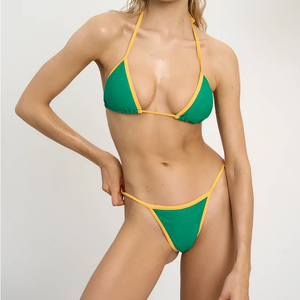
Engineered Swimwear Solutions Ready for Bulk Sourcing
Browse our proven commercial swimwear developments crafted with high-tensile inner linings, anti-transparency microstructures, and OEKO-TEX standard stretch resilience.
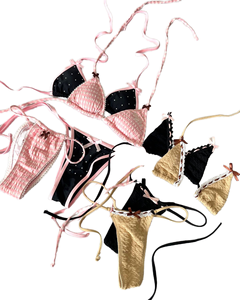

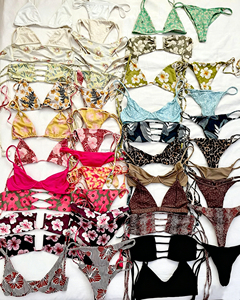
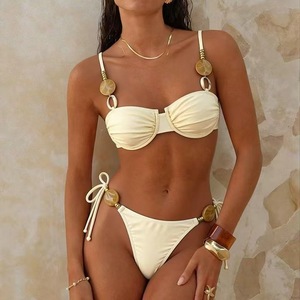

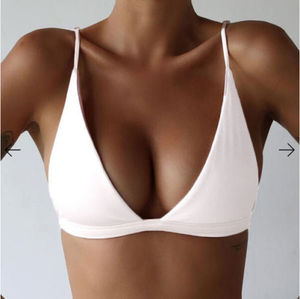
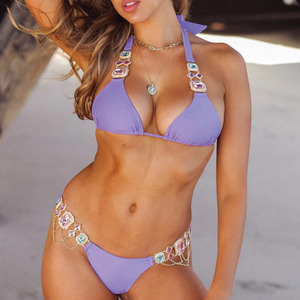
4.5+
Chlorine Fastness Grade (ISO 105-E03)
100%
Anti-See-Through Wet Opacity
300 Pcs
Flexible Low MOQ per Bulk Order
50+ UPF
Ultraviolet Skin Shield Rating
The Mechanics of High-Performance Swimwear Lining Fabrics
Why precision-knitted linings dictate consumer retention, tactile comfort, and seam structural integrity in high-humidity tropical resort wear.
Biaxial Mechanical Elasticity & Shape Recovery
Standard circular knits frequently sag when saturated with seawater. Our Thai-exported warp-knit tricot linings employ creora® highclo™ and regenerable elastane fibers configured in a 4-way micro-mesh. This maintains a 98.4% elastic recovery rate even after 120 hours of continuous tension loading in high-salinity maritime environments.
Hydrophobic Moisture Dispersal & Flash-Drying
Lining fabric directly interfaces with the epidermis. By engineering hydrophilic capillary micro-grooves onto the fiber surfaces, our textiles siphon perspiration and saltwater away from the skin. The fabric dissipates moisture across a broadened outer evaporation surface, reducing drying time by 42% compared to standard polyester interlocks.
Skin-Contact Biocompatibility & Anti-Chafing
Resort swimsuits must endure abrasive elements like fine quartz sand and friction from sunscreens. Utilizing ultra-fine denier multi-filaments (down to 15D/24F), our lining structures generate a peach-skin or brushed silky finish that prevents epidermal chafing, dermatological irritation, and micro-fiber pilling over extended resort usage.
Technical Lining Matrix: Comparative Performance Standards
Engineered specifically to satisfy both high-fashion boutique aesthetics and rigorous aquatic athletic criteria.
| Lining Variety | Composition (Gsm / Denier) | Primary Characteristic | Chlorine & UV Rating | Eco Certification |
|---|---|---|---|---|
| Ultra-Soft Micro-Tricot | 85% Polyamide, 15% Elastane (90–110 GSM) | Featherlight, Zero-Chafe, Second-Skin Feel | ISO 105-E03 Grade 4.5 | UPF 50+ | OEKO-TEX Class 1 |
| Chlorine-Resistant Poly Mesh | 88% Recycled Poly, 12% Spandex (120–140 GSM) | Rapid Sand Release, High Tension Recovery | 500+ Pool Hours | UPF 50+ | GRS Certified |
| ECONYL® Regenerated Circular | 78% Recycled Nylon, 22% Xtra Life Lycra® (130 GSM) | Ocean-Waste Circularity, High Modulus Support | Grade 5.0 Pool Chemical Shield | ECONYL® / Global Recycled |
| Anti-Microbial Sculpting Knit | 80% Nylon 6.6, 20% Elastane (150–170 GSM) | Bummy-Control Contouring, Odor Prevention | Grade 4.5 Pool / Saltwater Shield | Bluesign® Approved |
Localized Swimwear Applications & Macro Industry Trends in Thailand
How Southeast Asia’s epicenter of luxury tourism, bespoke atelier beachwear, and export textile mills utilizes our specialized swim linings.
Phuket & Samui Luxury Beach Club Apparel
Thailand’s world-renowned island leisure destinations create high local demand for ultra-luxe, metallic, and water-soluble micro bikini lines. In these environments, swimwear experiences severe stress from aromatic suntan oils, cosmetic alcohol sprays, and chlorinated infinity pools. Our linings integrate oleophobic coatings that repel oils, preserving elastomeric snap and preventing discoloration across tropical luxury resorts.
Bangkok Garment Export Clusters (Bang Bon & Phasi Charoen)
As established OEM apparel manufacturers in Greater Bangkok transition into high-margin private label swim lines, standard lingerie lining no longer passes international testing. Our high-modulus, pre-shrunk warp-knitted tricot fabrics provide clean cut-edges for ultrasonic bonded seaming, eliminating roll-over curling on high-speed industrial flat-lock machinery.
The Surge of Eco-Conscious Eco-Tourism Sourcing
Environmental directives across Southern Thai national marine reserves are driving demand for green apparel. International boutique founders operating in Thailand actively reject virgin petroleum synthetics. Supplying GRS-certified recycled PET and ECONYL® ocean-waste lining textiles enables local designers to market genuine, verifiable sustainability credentials to North American, European, and Australian travelers.
Ethical Precision, Low Barriers, and Seamless Technical Sourcing
Blending London-studio technical fitting expertise with agile Southeast Asian supply chain deployment.
Agile 300-Unit Low MOQ
Scale sustainably. Our flexible minimum order volume can be split across up to 6 styles (50 units each), enabling brands to test custom prints and lining pairings with minimal capital commitment.
Italian & Circular Fibers
We utilize premium Italian swim fabrics crafted from recycled PET plastic bottles and ECONYL® regenerated ocean waste, ensuring superior stretch recovery, durability, and a verifiable circular lifecycle.
Zero-Waste Cutting Studio
From digital nesting that reduces pattern paper consumption by 50% to converting cutting scraps into scrunchies and accessories, our sustainable manufacturing reduces landfill waste and greenhouse gas emissions.
End-to-End CMT Delivery
Full-stack technical integration: our in-house specialists handle technical pattern drafting, digital toiling, multi-round fitting refinement, grading (XXS–XXL), and direct door-to-door global shipping.
Frequently Asked Questions by Sourcing Directors in Thailand
Essential technical insights addressing import customs, fabric behavior, and minimum order requirements.
What makes swimsuit lining different from standard lingerie mesh?
Unlike standard lingerie mesh—which lacks chlorine defense and rapidly disintegrates from pool chemicals—swimsuit lining fabric is specifically woven with high-gauge synthetic polymers (such as Polyamide 6.6 or PBT) combined with chlorinated-water-resistant elastane (like creora® highclo™ or Xtra Life Lycra®). It provides high recovery tension, sand-release performance, and wet opacity to avoid transparency when exiting the water.
How do you handle customs clearances and import duties for shipments to Thailand?
We maintain established logistics channels directly to Bangkok (BKK) and Laem Chabang maritime ports. We provide full trade documentation including Harmonized System (HS) Codes (5903 / 6004 / 6006), commercial invoices, Packing Lists, and Certificates of Origin (Form E or EUR.1 where applicable) to streamline Thai Customs clearance and help clients leverage preferential tariff rates.
Can your linings prevent see-through issues on light-colored or white swimwear?
Yes. Sheerness in wet conditions is a common reason for product returns. We supply dense micro-tricot knit linings (120–150 GSM) engineered with specialized titanium dioxide (TiO2) delustered yarns. These yield 100% opacity, eliminating transparency across pastel and crisp white swimwear fabrics without adding excessive bulk.
What is your minimum order quantity (MOQ) for custom-dyed or bespoke lining fabrics?
For our in-stock classic shades (Black, Skin Nude, Pure White, Sun Sand, and Deep Navy), our MOQ starts at just 50 meters per colorway. For bespoke pantone lab-dip matching or custom compression modulus specifications, the bulk threshold is 300 meters, which aligns directly with our 300-unit finished garment CMT production capacity.
Are your swimwear linings suitable for athletic and competition swim gear?
Absolutely. Our high-performance lining lines feature 4-way mechanical compression, low water drag resistance, and high burst strength (tested according to ASTM D3786 standards). They resist friction from competitive diving and pool water impact while resisting degradation from chlorine, bromine, and saline treatments.
How do the linings hold up against tropical sun creams and sunscreen oils?
Our performance linings are tested against cosmetic chemicals (ISO 105-E04 and internal sunscreen exposure protocols). The polymer composition prevents yellowing, fiber brittleness, and loss of elasticity caused by octinoxate, avobenzone, and natural coconut-based tanning oils commonly used on Thai beaches.
Transform Your Swimwear Line with Certified Performance Linings
Consult with our technical textiles team to select the right lining density, compression profile, and eco-certified materials for your upcoming collection. Request technical swatches and our full export catalog today.
Get Catalog