Featured OEM & ODM Swimwear Prototypes
Examine our engineered production silhouettes available for private label customization, parent-child coordinates, and junior capsule collections. Each block features multi-directional stretch and medical-grade anti-chafing construction.
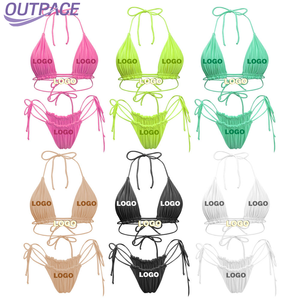
Women's Swimsuit Luxury Brand Swimwear Triangle Top With Chain Sexy Women Designer Bikini
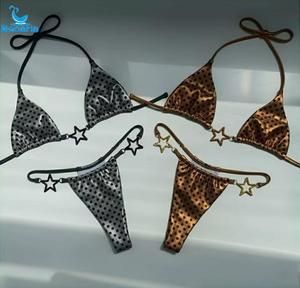
Pour Femmes Takimi Logo Thong Ensemble Swim Suits Triangle Women Swimwear Personalizado Conjunto De Women Custom Bikini Set
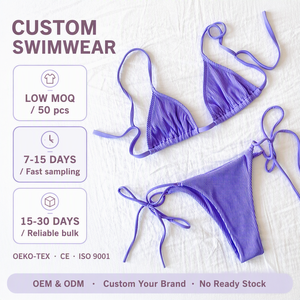
High-end Swimwear Manufacturer Custom Made Women Bikini OEM Service Plus Size Women's Clothing Adults Micro Thong Bikini Support
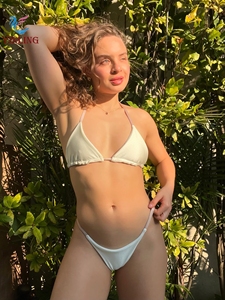
Women Cream Solid Triangle Halter Bikini Swimsuit Bathing Suit Contrast Trim High Cut Bottom Custom Low MOQ Fast Sample
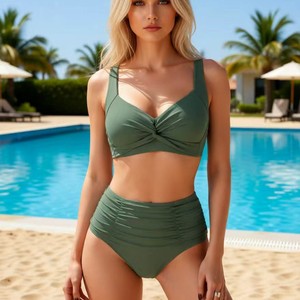
OEM/ODM Custom Summer Push Up Bikini Women's Beach Summer High Waisted Two Piece Plus Size Set - Wrap Tummy Control Swimsuit
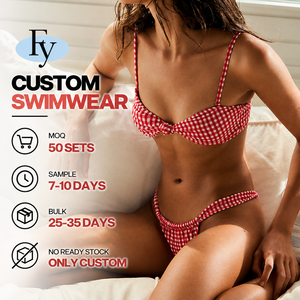
Custom OEM ODM Women Gingham Bikini Set Spaghetti Strap Twist Front Bikini Top Ruched Bikini Bottom Private Label Swimwear

2025 New Solid Two Piece Bikini String Bikini Hollow Out Special Fabric Fitness Swimwear Sexy Bikini Sets for Women
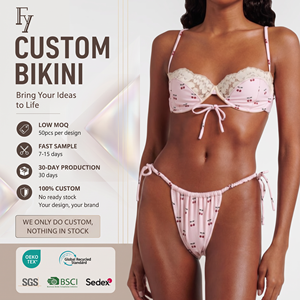
Sweet Pink Cherry Print Bikini Set Sexy Lace Patchwork Bowknot Swimwear Women Halter Ruffle Bathing Suit Cute Beachwear
Navigating the Global Children's Swimwear Supply Chain
Sourcing kids' bikinis, tankinis, and two-piece resortwear requires navigating a complex intersection of pediatric dermal safety, physical hazard regulations, and rapid consumer life cycles. Here is what separates elite apparel factories from ordinary volume vendors.
Pediatric Dermal & Chemical Safety
Children possess a higher skin-surface-to-body-weight ratio and a more permeable epidermal barrier. Premium kids bikini manufacturers must enforce strict chemical limits. Every dye lot and elastic tape must pass OEKO-TEX® Standard 100 Class I testing.
- Formaldehyde levels strictly < 16 ppm
- Zero restricted azo dyes (carcinogenic arylamines)
- Phthalate-free plastisol and water-based screen inks
- Cadmium & lead compliance under US CPSIA Section 101
Mechanical Hazard Engineering
Unlike adult bikinis, children’s swimwear is strictly governed by global safety protocols including EN 14682:2014 and ASTM F1816-97. Defective ties, loose beads, and uncontrolled drawstrings represent unacceptable choking and entrapment risks.
- No free-hanging neck halter cords exceeding 75mm
- Fully tacked interior elastics to stop coil slippage
- Bar-tacked stress nodes on leg arches and side seams
- Smooth-edge, non-pinching hardware rated to 150N pull test
Active UV & Hydrodynamic Durability
Young swimmers subject apparel to abrasive sand, pool tile friction, high-salinity seawater, and chlorine degradation. Premium fabric composition must maintain UV-blocking density both dry and fully saturated in motion.
- AS/NZS 4399:2020 verified UPF 50+ ultraviolet protection
- ISO 105-E03 Grade 4+ pool water chlorine colorfastness
- High-gauge warp knit preventing wet transparency
- Elastane with Creora® HighClo™ chlorine degradation block
Auditing Kids Swimwear Factories: Technical Benchmarks
Compare our vertically structured manufacturing infrastructure against conventional low-cost volume producers across key compliance and production parameters.
| Evaluation Parameter | Certified Premium Partner (Bikinova Standard) | Conventional Tier-3 Volume Vendor | Procurement Risk Factor |
|---|---|---|---|
| Toxicology & Dyes | Certified OEKO-TEX® Standard 100 Class I & GOTS Inks | Uncertified commercial dispersants with heavy-metal residues | High: Port recalls, allergic contact dermatitis in children |
| Mechanical Safety | EN 14682 Anti-entrapment + zero loose drawstrings on tops | Standard adult-spec cords repurposed for pediatric sizes | Critical: Severe compliance liability, customs product seizure |
| Minimum Order (MOQ) | 300 units total (split across up to 6 styles/sizes) | 1,200 to 3,000 units strictly per single style/colorway | Moderate: Capital lockup, inventory overstock and markdown loss |
| Raw Material Provenance | Traceable Italian ECONYL® regenerated nylon & Repreve® PET | Virgin nylon blend of unknown feedstock origin | High: Greenwashing litigation under EU Green Claims Directive |
| Grading Integrity | Digital 3D CAD grading from Infant (2T) through Junior (16Y) | Proportional enlargement without developmental anatomical adjustment | Moderate: Poor fit, high returns, crotch sag and slippage |
| Production Ethics | Fair living wage London studio + BSCI/SMETA Tier-1 audited partner mills | Non-transparent subcontracted cottage workshops | Severe: Reputational destruction via investigative supply audit |
Future Procurement & Engineering Trends in Kids Swimwear
How evolving consumer safety consciousness, parent lifestyle aesthetics, and global legislative mandates are reshaping the junior resortwear marketplace through 2030.
1. Circular Yarns & Monomateriality
The transition away from mixed polyamide-elastane blends toward mechanically recyclable mono-materials is accelerating. Forward-looking brands are sourcing 100% circular polymers that permit closed-loop recovery once children outgrow them.
2. "Mini-Me" Coordinates Boom
Family holiday capsule wardrobes demand exact Pantone color matching and print duplication between adult women's luxury swimwear and girls' two-piece sets. Factory partners must support synchronized pattern-cutting across adult and youth scales.
3. Modesty Hybridization
Bikini sets for youth are evolving into three-piece hybrid ensembles: crop-top athletic bralettes paired with UPF rash guards and boy-leg shorts, giving young girls comfortable coverage for active watersports without sacrificing beach resort style.
4. Micro-Batch Restocking Agility
Unpredictable weather and short peak retail seasons make large initial inventory commitments risky. Modern fashion labels rely on agile suppliers with rapid 3-4 week CMT replenishment capabilities to capture mid-summer viral spikes.
Why Direct-to-Factory Procurement at Bikinova Excels
From bespoke block development in our London slow-fashion atelier to ethical high-capacity manufacturing, discover our end-to-end B2B apparel architecture.
In-House Pattern & Toiling Atelier
Every children's block is precisely graded using our digital CAD system, reducing paper usage by 50%. We produce preliminary toiles to test tensile recovery, crotch ease, and shoulder strap security before touching production yardage.
Italian Eco-Textile Heritage
We partner directly with leading Italian mills to supply regenerated nylon (ECONYL®) crafted from recovered industrial fishing nets, post-consumer PET bottles, and circular lycra. All fabrics hold Oeko-Tex Standard 100 Class I credentials.
Low 300-Unit Multi-Style MOQ
Unlike rigid volume producers that demand 1,000+ units per color, our CMT model allows you to split 300 units across up to 6 distinct styles (50 units each). Test diverse cuts, sizes, and print stories in live markets with minimal risk.
Frequently Asked Procurement Questions
Everything brands need to know about safety protocols, fabric performance, lead schedules, and low-MOQ contract terms.
What certifications are required for manufacturing and importing kids' bikinis? +
How does your 300-unit minimum order quantity (MOQ) work across styles and sizing? +
What production lead times should buyers budget from concept to final warehouse delivery? +
How do you test and guarantee UPF 50+ sun protection on kids swimwear? +
Can we combine matching adult women's bikinis with youth sizes in a single production run? +
Launch Your Children's Swimwear Collection with Confidence
Connect directly with our London technical atelier and global production directors to request full material swatches, private label lookbooks, and custom OEM manufacturing cost sheets.
Get Catalog