Precision Pattern Engineering, Sustainable Italian Circular Textiles, and Agile CMT/FOB Supply Chains for Global Premium Labels.
300 Pcs
Flexible MOQ (Split 6 Styles)
100% Traceable
ECONYL® & Recycled PET
XXS–XXL
Digitized Fit-Tested Grading
14–21 Days
Rapid Prototyping & Lab Dips
Commercial Portfolio
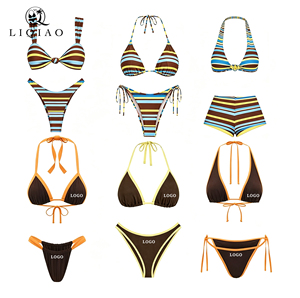
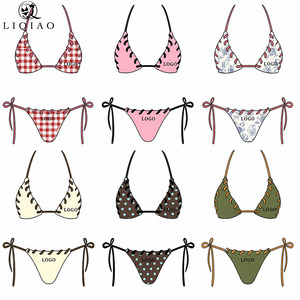
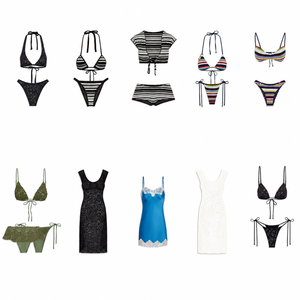
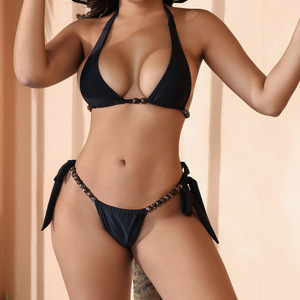
High-Performance Designer Swimwear References
Pre-engineered silhouettes and custom-tailored swim apparel manufactured under stringent AQL 2.5 quality parameters. Sourced directly through our verified London studio and certified partner facilities.
Technical Architecture of Modern Swimwear Manufacturing
An authoritative engineering assessment on transitioning swimwear brands from conceptual design sketches to compliant, retail-ready bulk production.
The contemporary aquatic apparel sector has transitioned beyond rudimentary Cut-Make-Trim (CMT) practices. Direct-to-Consumer (DTC) premium labels, boutique resort wear designers, and volume international retailers face an increasingly intricate production landscape. Manufacturing high-elasticity beachwear necessitates a rigorous convergence of elastomeric polymer science, complex dynamic grading, mechanical recovery testing, and ecological supply chain transparency. As an established OEM/ODM manufacturing partner headquartered in our dedicated London development facility with affiliated global high-capacity manufacturing centers, Bikinova integrates technical rigor across every phase of swimwear creation.
1. Elastomeric Fiber Kinetics & Raw Material Engineering
Unlike standard apparel textiles, swimwear warp knits operate under relentless hydrostatic stress, ultraviolet radiation (UVA/UVB 50+), extreme hyper-chlorination, and lipid degradation triggered by synthetic sunblocks and natural sebum. Standard elastane fibers experience molecular slippage and tensile fatigue after fewer than 40 hours of chlorine submersion. In our production systems, we engineer swimwear using premium Italian-milled circular fabrics constructed from ECONYL® regenerated nylon (derived from reclaimed fishing nets, carpet fluff, and post-industrial plastic polymers) and post-consumer recycled PET bottles.
By pairing high-tenacity regenerated polymers with extra-chlorine-resistant Xtra Life LYCRA®, our textiles achieve exceptional dimensional stability, shape retention, and four-way elongation (yielding recovery rates above 92% under cyclic elongation testing). Furthermore, digital continuous-feed sublimation printing ensures hyper-crisp color yields (colorfastness rating ≥ Grade 4.5 against sea water, acidic perspiration, and chlorinated pool water) without degrading fiber breathability or causing surface micro-cracking when stretched over curves.
Performance Dimension
Standard Virgin Polyamide Fabric
Italian ECONYL® Regenerated Nylon
Technical Verification Method
Chlorine Degradation Resistance
Fiber failure at ~30–40 pool hours
Exceeds 200+ hours with zero bagginess
ISO 105-E03 Accelerated Chlorine Test
Dynamic Stretch & Recovery
75% - 80% shape retention
> 92% instant mechanical recovery
ASTM D3107 Dynamic Elastic Recovery
Ultraviolet Block Factor
UPF 20 to 30 (degrades when wet)
Guaranteed UPF 50+ (wet and dry)
AS/NZS 4399:2017 UV Shield Protocol
Suncream & Hydrocarbon Shield
Prone to yarn swelling and staining
Double-knit resistance barrier
AATCC 130 Soil/Lipid Release Resistance
Carbon Footprint Equivalent
High petroleum extraction baseline
Reduces global warming impact up to 90%
LCA ISO 14040/44 Environmental Audit
2. The Precision Pattern-to-Bulk Operational Workflow
A frequent vulnerability in fashion manufacturing is the disconnect between initial pattern toiles and commercial grade production runs. At Bikinova, our vertically integrated operational flow eliminates intermediary agents through clear stage gating:
Digital Digitization & Toiling (Weeks 1–4): Translating creative CAD illustrations or physical samples into parametric 2D/3D CAD patterns using industry-standard digital grading systems. We cut preliminary toiles from balanced test fabrics to optimize anatomical apex points, gusset curvature, and strap tension balance before touching production textiles.
Fit Testing & Prototype Approval (Weeks 5–7): Producing physical pre-production samples across true fit models spanning cup sizes A through G and UK/US apparel ranges 6 to 24 (XXS to XXL). Samples undergo seam elasticity stress tests to verify stitch elongation integrity under real-world movement.
Nesting Optimization & Clean Cutting (Weeks 8–9): Utilizing advanced computerized pattern nesting to minimize raw material waste. Our automated digital fabric cutters slice low-tension stacks, eliminating edge curling common in high-elastane warp knits.
Bulk CMT Sewing & Active Seaming (Weeks 10–14): Assembling panels using high-speed 4-thread overlock, flatlock, and zig-zag top-stitching machines calibrated with woolly nylon under-threads to prevent thread breaks under extreme fabric extension. Rubber elastics (natural or hypoallergenic synthetic) are inserted with synchronized tension feeding for uniform edge grip without binding.
Why Partner With Us
Enterprise Advantages Built for Growing & Established Labels
Combining the design sophistication and pattern expertise of a London development studio with the scalable production efficiencies of certified global ethical factories.
Agile Low MOQ Thresholds
We break traditional manufacturing barriers with a flexible minimum order quantity of 300 units per production run. Brands can split this across up to 6 unique silhouettes (starting from 50 units per style) with multi-size and color allocations, empowering agile market testing with minimal inventory liability.
Dual-Track OEM & ODM Agility
Select from our pre-graded, fit-tested Ready Designs Catalogue to bypass 4–8 weeks of prototyping development fees, or partner directly with our London master technicians to construct bespoke, proprietary custom patterns from initial sketches or physical reference garments.
Measurable Eco-Studio Commitments
Our commitment extends beyond greenwashing: computerized nesting cuts pattern paper consumption by 50%, energy-efficient industrial motors cut electrical draw by 20%, cutting room scraps are upcycled into matching accessories, and every shipment uses 100% recycled or donated packaging materials.
Procurement Intelligence
Future Sourcing & Technology Trends in Swimwear Manufacturing
Critical strategic shifts procurement officers, apparel founders, and sourcing executives must factor into their upcoming product life cycles.
The industry is migrating from open-loop recycling to true closed-loop circular nylon, alongside elastane polymers engineered with organic additives to accelerate marine biodegradation without compromising in-pool lifespan. Sourcing teams are increasingly auditing post-consumer certifications to comply with stringent EU ecodesign directives.
Fit Tech
Dynamic Anthropometric Grading
One-size-fits-all grading rules are obsolete. Brands winning market share now require three-dimensional anatomical grading that accommodates long/short torsos, athletic back curves, and inclusive bust support without underwires. Sourcing digital block patterns with proven fit tolerances significantly lowers return rates in e-commerce channels.
Supply Chain
Hybrid Nearshore Prototyping & Distributed Bulk
Leading labels operate on hybrid sourcing models: executing high-touch pattern engineering, fits, and limited short-runs in agile European studios (such as London), then scaling high-volume bulk runs through cost-optimized, certified global facilities. This hybrid approach accelerates launch cycles while preserving gross margins.
Procurement Clarifications
Frequently Asked Questions by Swimwear Buyers & Brands
Direct technical answers addressing the critical operational concerns of fashion founders and corporate sourcing specialists.
What is the minimum order quantity (MOQ) and how can it be divided?
Our standard production MOQ is 300 finished units per purchase order. To support brand expansion and diverse SKU testing, this volume can be divided across up to 6 distinct garment styles (starting at 50 units per style). Furthermore, each style can be split across your designated range of colorways, prints, and standard sizes (XXS to XXL). For example, a complete two-piece bikini set counts as two style allocations (top and bottom), allowing you to produce three coordinated two-piece sets in a single 300-unit production order.
What is the lead time difference between Ready Designs and Custom OEM?
Private Label Ready Designs require approximately 10 to 16 weeks total, because patterns, grading, and wear fittings are pre-completed; the workflow covers sample textile sourcing (2–3 weeks), sample sign-off (2 weeks), bulk yardage milling (2–3 weeks), and bulk CMT production (4–8 weeks). Custom ODM/OEM style development typically requires 12 to 19 weeks to allow for bespoke technical block drafting, fit toiles, physical lab dip approvals, and multiple fit rounds prior to bulk cutting.
How does your factory ensure seam elasticity without stitch snapping?
Swimwear assembly demands specialized thread and needle timing. We utilize high-tenacity, textured polyester and woolly nylon loopers paired with differential feed overlock and cover-stitch machinery. This mechanical configuration yields an elongation factor exceeding 100%, matching the natural stretch of Italian high-elastane fabrics. Additionally, internal leg openings and under-bust bands incorporate premium chlorine-resistant rubber elastics calibrated to tension-free guides to avoid puckering and edge rolling.
Can we supply our own custom prints, metallic hardware, and private labels?
Yes. We provide comprehensive full-package private labeling services. Clients can upload vector artwork for digital continuous-feed sublimation printing or engineered placement prints. We also develop custom-branded hardware (anti-tarnish zinc-alloy or resin sliders, rings, magnetic front clasps, and amber beads tested against sea salt corrosion) along with heat-seal care tags, recycled woven labels, compostable hygiene liners, and custom biodegradable polybags.
What quality assurance standards are applied during bulk swimwear manufacturing?
Every production batch adheres strictly to ISO 2859-1 (AQL 2.5 Normal Inspection Level II) quality inspection criteria. QA technicians monitor fabric relaxation prior to cutting, perform four-point system visual fabric inspections, audit stitch tension every two operating hours, conduct 100% needle-detector scans, and measure finished garments against approved specification tolerance sheets (±0.5 cm margin) before final packing and global dispatch.
Ready to Build or Scale Your Swimwear Collection?
Whether you require fit-tested private label production to accelerate launch timing or custom technical pattern development from our London studio, our manufacturing engineers are ready to review your tech pack and deliver transparent cost breakdowns.