Signature Recycled Bikini & Swimwear Catalog
Curated private label capsules and OEM production benchmarks. Each piece utilizes certified regenerated polyamides or recycled polyester blends with four-way mechanical stretch recovery and chlorine-resistant treatments.
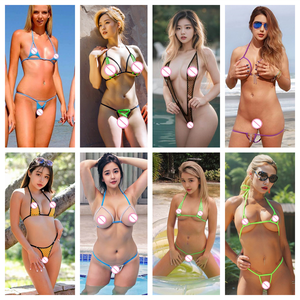
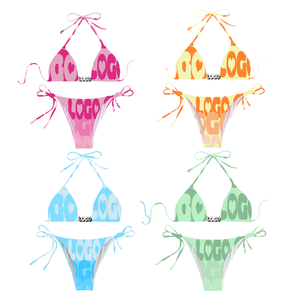
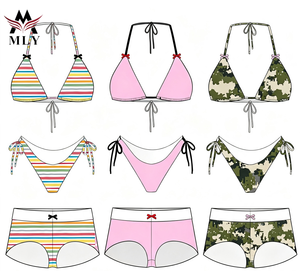
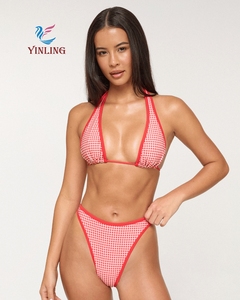
Why Tier-1 Sustainable Brands Partner With Our Facilities
Combining European technical atelier benchmarks with China's deeply integrated supply ecosystem, we provide agile cut-make-trim (CMT), full package design (FOB/DDP), and rigorous testing protocols for global brands.
End-to-End In-House Studio
By keeping pattern digitizing, toile draping, laser cutting, sample making, fit grading, and bulk CMT operations under one rigorous quality ceiling, we eliminate intermediary miscommunications.
- Automated Gerber & Lectra CAD pattern nesting systems
- Laser-guided fabric spreading for dimensional stability
- Real-time inline AQL 2.5/4.0 defect monitoring
Agile Low-MOQ Tiered Production
Overcoming the legacy barrier of 2,000-unit factory minimums. We support boutique and high-growth DTC labels with aggregate batch production starting from 300 pieces per order.
- Split orders across up to 6 custom silhouettes (50 pcs/style)
- Individual styles divisible into various colors and sizes
- Instant access to continuous greige-yarn color libraries
Eco-Conscious Factory Infrastructure
Our corporate footprint incorporates proactive environmental commitments verified through strict SMETA and BSCI social compliance protocols.
- Digital pattern plotting reducing pattern card waste by 50%
- Direct-drive servo motors cutting floor electricity draw by 20%
- Zero-waste cutting scrap upcycled into matching hair scrunchies
- 100% recycled biodegradable shipping bags & re-used cartons
Technical Fabric Comparison: Conventional vs. Regenerated Swimwear Textiles
| Performance & Material Vector | Standard Virgin Polyamide / Poly | ECONYL® Regenerated Nylon 6 | Repreve® Recycled Polyester (rPET) |
|---|---|---|---|
| Raw Material Source | Crude oil petrochemical refining | Ghost fishing nets, industrial carpet fluff | Post-consumer recycled clear PET bottles |
| Carbon Footprint Reduction | Baseline standard (High CO₂ eq) | Up to 90% reduction vs. virgin nylon | Approx. 75% fewer GHG emissions |
| Chlorine Degradation Resistance | Moderate (breaks down in 40h pool contact) | Superior with Creora® Highclo™ (200h+) | Excellent tensile retention in chlorinated water |
| Color Fastness (ISO 105-E03) | Grade 3-4 | Grade 4.5 (High pigment lock-in) | Grade 4.5 (Sublimation and digital transfer) |
| Certification & Traceability | Standard mill invoices only | Aquafil certificate + GRS TC per lot | FiberPrint® isotope tracer verification |
Navigating the Global Recycled Swimwear Landscape: 2025–2030
A rigorous examination of supply chain transparency, elastomer mechanical longevity, circular closed-loop systems, and regulatory ESG imperatives for swimwear sourcing directors.
1. The Evolution of Recycled Synthetics in Hydrodynamic Environments
Over the past decade, the swimwear sector has undergone a profound transformation. What once began as a niche marketing proposition has evolved into an uncompromising engineering discipline. The initial generation of recycled synthetic fabrics frequently struggled with issues of hydrophobicity, pilling propensity, and premature elastomeric degradation when exposed to saltwater, atmospheric ozone, and halogenated swimming pool agents. Today, molecularly regenerated nylon 6 (such as Italian ECONYL®) and continuous filament recycled polyester (such as Repreve®) offer mechanical properties that match, and in specific shear-stress tests exceed, virgin fossil-fuel counterparts.
In wholesale manufacturing, the principal technical metric is the fabric's dimensional stability under dynamic wet elongation. While standard virgin synthetics exhibit a high initial modulus, their elasticity curves tend to decay rapidly under cyclical wetting and drying regimes. By pairing depolymerized high-tenacity recycled yarn with high-performance chlorine-resistant elastane (specifically polyether-based block copolymers such as Creora® Highclo™ or Lycra® Xtra Life™), modern recycled bikinis maintain consistent modulus of elasticity and return-recovery force across 100+ intensive immersion cycles.
2. Macro Procurement Trends Shaping Sustainable Swimwear Sourcing
As international supply chain heads review their forward vendor matrix, four prevailing procurement trends define competitive advantage for upcoming resort and summer seasons:
Granular Digital Traceability & DPP
The European Union's upcoming Digital Product Passport (DPP) mandate and tightening greenwashing regulations require verified chain-of-custody documentation. Brands can no longer rely on self-declarations. Every batch must be underpinned by Global Recycled Standard (GRS) Transaction Certificates tracing clear feedstock provenance from port-reclaimed netting to finalized yarn spindles.
Compression of Development Lead Times
Traditional 6-month product lifecycles are being replaced by responsive 'micro-season' drops. B2B buyers now prioritize manufacturers with fully integrated 3D virtual sampling (Clo3D/Browzwear), digital color management, and local greige-goods inventories that compress prototype sign-offs from 6 weeks down to 10 working days.
Textured & Tactile Recycled Surfaces
Market demand has shifted decisively away from flat synthetic sheens toward three-dimensional textures. Micro-crinkle knits, honeycomb jacquards, rib-stitch weaves, and terry-cloth toweling crafted from 100% recycled filament provide retro-nostalgic aesthetics while concealing minor seam stress points and enhancing breathability.
3. Future Product Trajectories: Biodegradability, Circular Elastomers & Zero Shedding
Looking toward the 2026–2030 product horizons, recycled synthetic swimwear is addressing its two remaining engineering frontiers: post-consumer circular deconstruction and aquatic microfiber shedding.
Historically, swimwear that blends 80% polyamide with 20% elastane has posed near-insurmountable obstacles to mechanical recycling because the elastane cannot be separated without degrading the nylon polymer chain. We are already engineering trials with chemically recyclable single-polymer stretch solutions and specialized dissolving stitch threads that permit automated disassembly at garment end-of-life. Simultaneously, ultrasonic edge sealing and thermofused hem bents are replacing conventional overlock sewing in high-friction zones, slashing microfiber release during domestic laundry cycles by upwards of 40%.
Critical Path: Custom Development to Bulk Shipping Workflow
Digital grading, base block creation, 3D drape verification & fit consultation.
Strike-off digital print approval, pantone color matching, and physical proto sample approval.
Precision automated cutting, 4-needle 6-thread flatlock assembly, Framis elastic tape setting.
Needle detection, tensile load check, barcode polybagging & direct sea/air international freight.
Frequently Asked Sourcing & Manufacturing Questions
Detailed technical, commercial, and operational specifications to facilitate smooth onboarding for brand founders, product developers, and procurement executives.
What is the minimum order quantity (MOQ) and how can styles be divided?
What verifiable certifications do you supply to prove fabric authenticity?
Can we mix your Private Label ready designs with custom bespoke styles?
What are the exact lead times from initial tech pack submission to bulk delivery?
What size range and specialized anatomical fits can your pattern masters execute?
What custom branding, hardware, and sustainable packaging options are available?
Ready to Build Your Sustainable Swimwear Collection?
Initiate technical fabric sourcing, request our complete private label lookbook, or submit your bespoke tech packs to our engineering masters for immediate costing analysis.