Plus Size Underwire

CE Certified
Double Lined
D–G Cup Fit
Every style showcased below is pre-engineered for strict CE & EU Market Compliance, featuring high-recovery elastomeric tolerances, ultra-chlorine resistance, and certified non-toxic dye profiles.

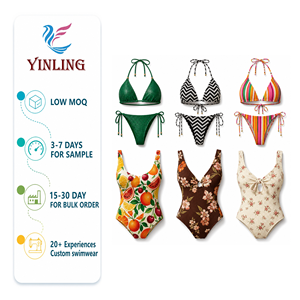
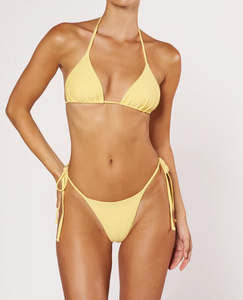
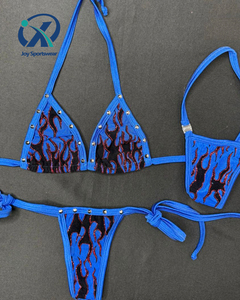


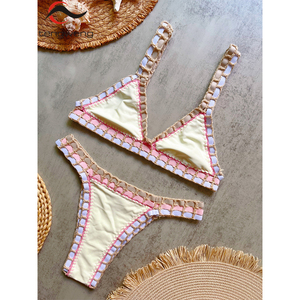
Split across up to 6 styles (50 units per style / colourway)
Tested for heavy metals, nickel release, azo dyes, and skin allergens
Developed & wear-tested by London technicians for ergonomic fit
Expedited sampling and computerized marker-making workflows
Navigating the complexities of European Union standards, PPE safety directives, chemical safety under REACH (EC No 1907/2006), and the General Product Safety Regulation (GPSR 2023/988).
For international fashion importers, wholesale distributors, and retail chains, procuring swimwear destined for the European Economic Area (EEA) involves far more than simply selecting eye-catching silhouettes and vibrant seasonal prints. When modern consumers purchase swimwear, they expect complete dermatological safety, UV protection, and long-lasting fabric integrity under harsh conditions.
Under European harmonization, beachwear providing certified solar ultraviolet protection falls under PPE Category I (Personal Protective Equipment) Regulation (EU) 2016/425. To legally carry the CE declaration and provide legitimate UPF 50+ ultraviolet claims, manufacturers must submit fabric assemblies to rigorous spectral transmittance testing under EN 13758-1 and EN 13758-2.
Furthermore, under the EU REACH Directive, all metallic adjusters, closures, decorative beads, and underwire components must satisfy EN 1811 testing, confirming a nickel release rate below 0.5 μg/cm²/week to eliminate contact dermatitis. Fabrics must be verified free of carcinogenic aromatic amines derived from azo colorants (<30 mg/kg under EN ISO 14362-1) and completely exempt from short-chain chlorinated paraffins and perfluoroalkyl substances (PFAS).

| Compliance Standard | Target Component | Testing Protocol | Bikinova Certified Benchmark | Market Clearance |
|---|---|---|---|---|
| PPE Regulation (EU) 2016/425 | UPF 50+ Protective Lycra | EN 13758-1 / EN 13758-2 | UVA & UVB Blockage > 98.2% after 20 wash cycles | CE Marked (Cat I) |
| REACH Annex XVII (Nickel) | Eyelets, Underwires, Clasps | EN 1811:2011 + A1:2015 | < 0.28 μg/cm²/week migration limit | Hypoallergenic Pass |
| OEKO-TEX® Standard 100 | Regenerated Nylon / Elastane | Class I (Direct Skin Contact) | Formaldehyde < 16 ppm, Zero Toxic Azo Cleavage | Global Clean Lab |
| ISO 105-E03 / ISO 105-E02 | Dyed Fabrics & Elastic Core | Chlorine Water & Sea Water Fastness | Grade 4–5 Color Retention after 50 ppm Pool Exposure | Zero Fade Pass |
How forward-thinking direct-to-consumer labels, European boutique chains, and global resort retailers are structuring their annual supply chains for agility, circularity, and margin defense.
The outdated model of contracting 5,000 pieces per style with high inventory depreciation risk is being supplanted by lean production. Brands are ordering 300 to 500 units partitioned across multiple silhouettes to test conversion rates live before committing capital to secondary replenishment runs.
By employing standardized blocks and varying only colorways or surface prints, brands achieve production efficiencies without carrying bloated seasonal inventory.
European consumer sentiment mandates legitimate sustainability credentials over superficial greenwashing. Procurement managers now insist on verifiable raw material provenance, turning exclusively to Italian ECONYL® regenerated polyamide sourced from discarded fishing nets and GRS-certified post-consumer rPET.
Garments built for longevity with superior elastane compounding survive 3x more laundering cycles, directly reducing micro-plastic shedding into marine ecosystems.
The standard S–M–L size matrix is rapidly being phased out by high-growth beachwear brands. Today's commercial winners provide engineered cup sizes ranging from Petite A to fuller-bust G cups, coupled with diverse coverage variations (Brazilian cheeky cuts alongside modest high-waisted briefs).
Brands require technical manufacturing partners capable of creating bespoke grading rules so bust lift and waist tension remain balanced across extended size scales from XXS to XXL.
The confluence of ultrasonic bonding, tension-controlled computerized feeding, and digital 3D pattern development that separates premium luxury swimwear from mass-market apparel.
Advanced studios utilize CLO 3D and Browzwear CAD drafting to simulate fabric stretch recovery, tension zones, and seam strain virtually before touching raw Italian yardage. This trims development cycles by over 60%, drastically cutting toile fabric waste while perfecting garment drape on real anatomical avatars.
Traditional lockstitching chafes against wet skin and snaps when fabric stretches beyond 120%. Cutting-edge bikini fabrication relies on four-needle six-thread (ISO 607) flatlock systems and ultrasonic bonded hems with Framis Italia heat-activated elastic films, creating stitchless, low-drag, sleek silhouettes.
Standard spandex degrades rapidly when exposed to chlorinated pool chemicals and unsaturated triglycerides in sunscreen lotions. Modern high-spec swimsuits feature Lycra® Xtra Life™ or Creora® Highclo™ elastane filaments, retaining up to 10 times more shape recovery than conventional swimwear fibers.
Every production stage is governed by strict ISO critical path protocols, ensuring zero surprise delays and end-to-end transparency for retail calendar launches.
Drafting bespoke vector blocks, establishing stitch allowances, and producing physical toiles while sampling fabric arrives from our partner mills in Italy.
Real-garment creation in actual colorway fabrics. Live anatomical fittings inspect bust uplift, crotch gusset comfort, and tie-string tension before grading sign-off.
Proportional scaling across sizes XXS to XXL using computerized nesting software to optimize marker efficiency and conserve raw yardage.
Precision computerized fabric cutting, four-needle assembly, inline QC inspection, branded packaging with recycled materials, and dispatched global freight.
Combining the creative design discernment of a London fashion atelier with high-volume, cost-efficient Cut, Make, Trim (CMT) manufacturing discipline.

Unlike opaque subcontracting brokers who farm orders out to unverified third-party factories, Bikinova coordinates the full lifecycle of your swimwear collection directly. Pattern cutting, toiling, sampling, grading, and bulk production operate with seamless technical oversight.
Our manufacturing philosophy eliminates the friction points that derail emerging fashion houses: high Minimum Order Quantities (MOQs), protracted iteration lag times, and unpredictable shrinkage variances.
By blending Private Label Ready Designs (allowing founders to launch in weeks with zero pattern-drafting fees) and bespoke Full Custom Development under one roof, we give brand owners unprecedented flexibility to test fresh market niches with minimal financial exposure.
Divide your 300-unit minimum order across up to 6 unique styles (50 units each). Launch multiple colorways and silhouettes without committing to thousands of unsold units.
Direct supply agreements with elite mills in Italy. Sourcing certified ECONYL® regenerated nylon and post-consumer bottle yarns with superior recovery and hand feel.
Our computerized digital marker-making algorithms draft nests tightly, saving up to 50% in paper card consumption and maximizing raw fabric yield per bolt.
All industrial flatlock, overlock, and coverstitch workstations operate on variable-frequency economic servo motors, reducing electrical draw across the production floor by 20%.
Our master pattern cutters, fit technicians, and QA inspectors supervise production from our London studio, guaranteeing clear communication and punctual handoffs.
Offcut lycra scraps are converted into matching swim accessories (hair scrunchies, headbands, drawstring pouches) or redirected to verified textile recycling streams.
Direct answers on international trade codes, minimum order allocations, shrinkage tolerances, custom hardware certifications, and lead time controls.