Top Commercial Runway Styles & Fast-Track Production Sets
Engineered with precision pattern grading, 4-way elastic stretch recovery, and chlorine-resistant structural stitching. Available for private label rebranding or custom CMT specification.
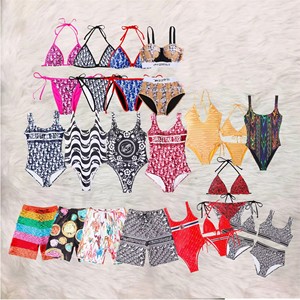
Customization Hot Style Ladies Grid Printed Swimwear Wholesale Fashion Women Bikini Designer Swimsuit
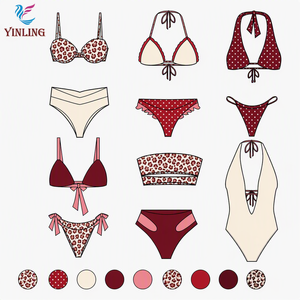
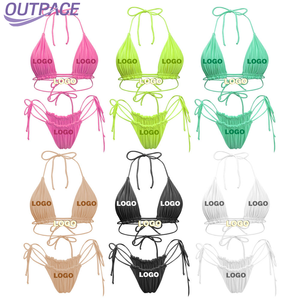
Women's Swimsuit Luxury Brand Swimwear Triangle Top With Chain Sexy Women Designer Bikini

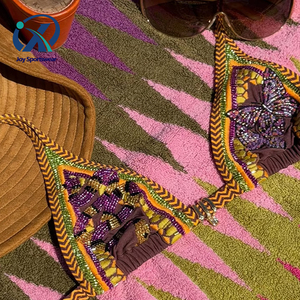
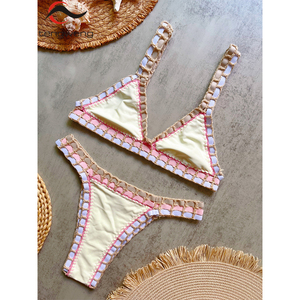
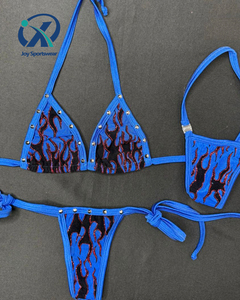
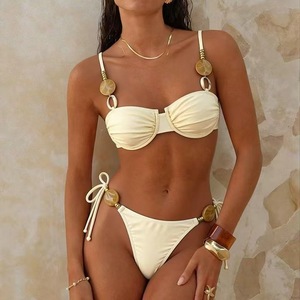
2026 New European and American Split Swimsuit Sexy Fashion Hanging Neck Solid Color Bikini Set Wholesale
Full-Vertical British Craftsmanship & Ethical Studio Production
By uniting pattern generation, physical toile verification, 3D computerized stress modeling, and high-frequency bulk CMT production within our London atelier, we mitigate sample iteration delays and eliminate cross-border agent markups.
Precision In-House Pattern Cutting & Toiling
Bespoke block drafting executed by master swimwear technicians. Each prototype undergoes physical toiling in specialized elastomeric test cloths to verify underbust tension, apex balance, and leg-opening modulus prior to pattern digitalization.
- Custom block development from rough vector sketches
- Calibrated to fit real athletic, curvy, and fuller-bust bodies
- Digital conversion to CAD/CAM format within 5 business days
Agile Low MOQ CMT Production (300 Units)
Engineered for agile runway releases and luxury capsule collections. Our commercial minimum order quantity of 300 units is splittable across up to 6 distinct styles (50 units each), encompassing multi-size grading from XXS to XXL.
- Mix private label ready designs with original bespoke sketches
- Flexible colorway allocation within each 50-piece production batch
- Zero deadstock risk for early-stage direct-to-consumer labels
Circular Sustainable Materials (ECONYL® / PET)
We source strictly through premium Northern Italian mills producing high-gauge circular knitwear from recycled ocean fishing nets, discarded industrial carpet fluff, and post-consumer PET bottles, delivering superior resilience against suntan oils.
- Two-fold chlorine resistance compared to ordinary elastanes
- OEKO-TEX Standard 100 Class I & GRS (Global Recycled Standard)
- Hyper-flat knit construction preventing microfiber ocean loss
Ethical Green Studio Operations
Our facility operates on high-efficiency direct-drive servo sewing motors reducing electrical consumption by 20%, illuminated entirely by 90% power-saving luminaire LED matrices, and running computer-optimized marker nesting software.
- 50% reduction in paper and card waste through computerized nesting
- 100% recycled biodegradable shipment polybags and re-used cartons
- Cutting room offcuts diverted into accessory hair scrunchies
Comprehensive Brand Identity Integration
Elevate wholesale margin velocity with factory-installed custom branded hardware, laser-engraved zinc alloy cord stoppers, heat-sealed satin wash-care labels, recycled silicone chest transfers, and FSC-certified retail display swing tags.
- Corrosion-resistant electroplated hardware tested in 48hr salt spray
- Sublimation and digital screen placement printing calibrated to block curves
- Seamless panty hygiene liner application compliant with EU retail laws
Technical Delivery & End-to-End Critical Path
Dedicated account managers establish strict critical paths monitoring fabric lab dip approvals, grading sign-offs, pilot lot sewing runs, and AQL 2.5 final visual inspections to ensure reliable international distribution.
- Structured transparent production milestones updated weekly
- Pre-shipment drop testing, seam slippage, and stretch retention data
- Direct worldwide courier distribution or sea-freight consolidations
Demystifying CE Certification & International Technical Safety in Swimwear
In high-end luxury resortwear, consumer safety and performance transparency have shifted from optional marketing points to legal prerequisites. When swimsuits and designer bikinis make UV-blocking or skin-protective claims within the European Economic Area, they fall squarely under Regulation (EU) 2016/425 for Personal Protective Equipment (Category I PPE).
Our manufacturing protocols align with standard EN 13758-1 & EN 13758-2 (Solar UV protective properties for apparel). This guarantees that every linear yard of knitted fabric maintains a laboratory-certified Ultraviolet Protection Factor (UPF) of 50+, filtering out 98% of harmful UVA and UVB radiation in both dry and wet saturated operating conditions.
Furthermore, our supply chain is mapped against REACH Annex XVII, guaranteeing that every metal chain, gold clasp, and print pigment is strictly free from extractable nickel, carcinogenic azo dyes, phthalates, and formaldehyde.

Swimwear Performance Benchmarks: Conventional vs. BIKINOVA CE Standards
An engineering breakdown comparing low-cost uncertified contract production with our studio-grade CE and ISO-benchmarked swimwear manufacturing.
| Quality Parameter | Standard Commodity Swimwear | BIKINOVA CE-Certified Engineering | Compliance Test Method |
|---|---|---|---|
| Solar UV Protection | UPF 15–20 (Degrades rapidly when wet) | UPF 50+ Guaranteed (Dry & Saturated) | EN 13758-1 / EN 13758-2 |
| Chlorine Degradation | Fiber breakage after 20 hours | 240+ hours without elastomeric creep | ISO 105-E03 (Chlorinated Water Fastness) |
| Seam Elasticity & Recovery | Single lockstitch; cracks under 40% elongation | 4-thread overlock + flatlock (130% stretch) | ASTM D4964 / ISO 13936-1 |
| Chemical Toxicology | Untraced pigments; risk of aromatic amines | Zero Azo Dyes & Formaldehyde | OEKO-TEX Std 100 Class I / REACH Annex XVII |
| Hardware Corrosion | Tarnishes & oxidizes in marine air (12 hrs) | Electroplated alloy (48h salt spray neutral) | ASTM B117 (Neutral Salt Spray Exposure) |
| Shape Memory Retention | Bagging at buttock apex within 5 wears | >98% recovery modulus after 100 extension cycles | DIN 53835 Cycle Tensile Strain Test |
Future Procurement Trends Transforming Designer Swimwear (2025–2030)
As international luxury conglomerates, digital-native boutique founders, and venture-backed resort brands prepare forward-season lines, four macroeconomic and technical shifts are redefining global supply agreements.
1. EU Digital Product Passports (DPP)
By 2026, the European Ecodesign for Sustainable Products Regulation (ESPR) mandates digital traceability. Smart brands are procuring garments manufactured with verified scannable QR micro-labels linking to material origin, GRS transaction certificates, and mill water consumption metrics.
2. Bio-Based Elastane Alternatives
Traditional petrochemical spandex degrades rapidly when subjected to sun lotion oils and releases synthetic micro-shards. Forward-looking procurement directors are transitioning toward plant-derived elastomeric polymers derived from non-food corn starch and renewable biopolymers.
3. Nearshoring & Local European CMT
Supply chain volatility, fluctuating airfreight fuel surcharges, and prolonged transit backlogs have made Far-East mega-runs risky for high-margin designer capsules. Local London and European production studios permit rapid in-season inventory replenishment within 48 to 72 hours.
4. Inclusive Structural Ergonomics
The modern consumer demographic rejects standard single-mold sizing. Successful labels specify complex cup-and-underband grading, targeted power-mesh lining for postpartum waist containment, and ergonomic strap anchoring capable of supporting bust volumes from D to J cup tiers.
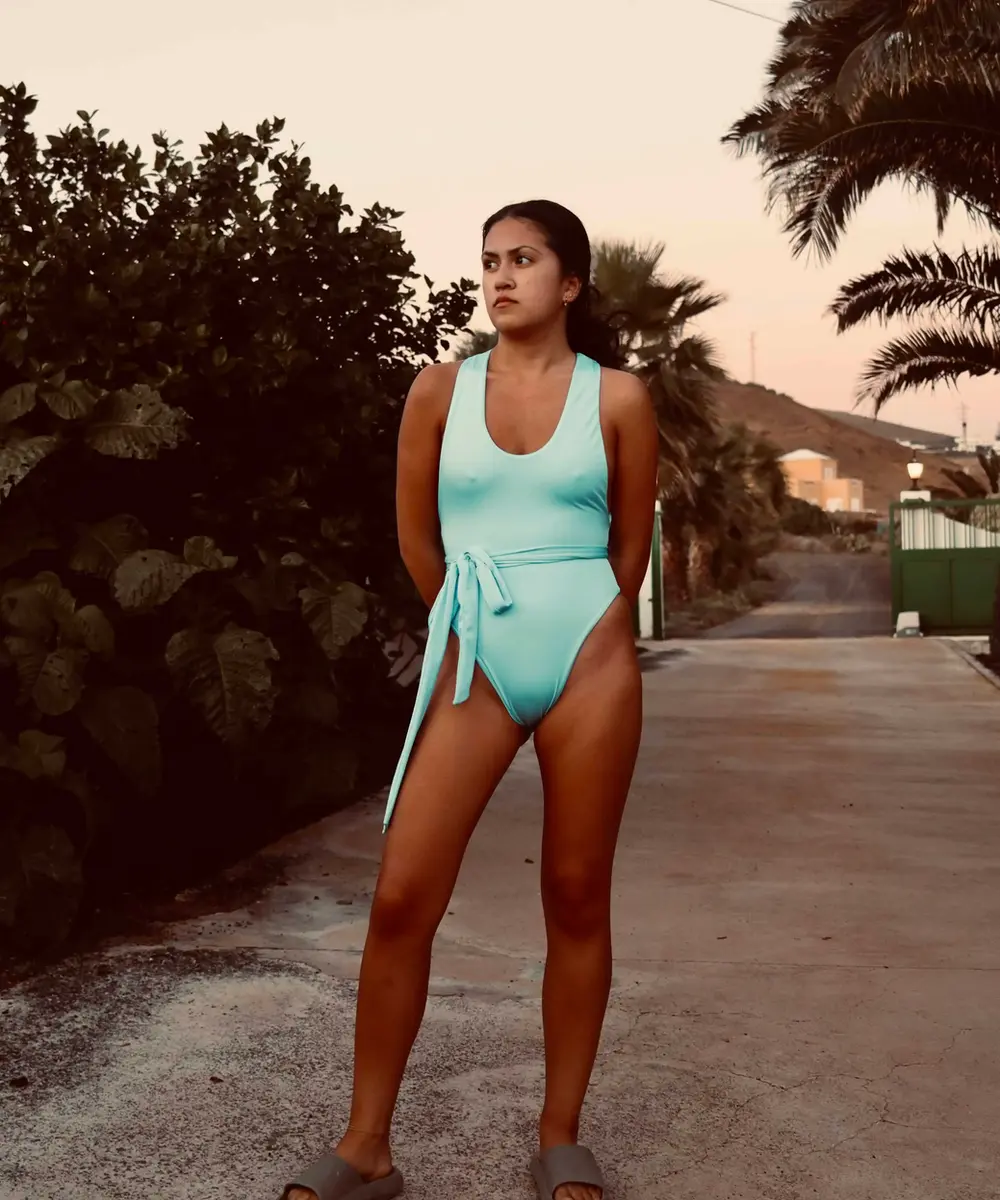
Engineering Longevity: The Anatomical Construction of a Designer Bikini
A designer bikini is subject to harsher physical stress than almost any other garment category: high UV solar exposure, chemically aggressive hypochlorite swimming pool water, sodium chloride marine saturation, abrasions against sand granules, and severe hydrostatic friction forces.
To overcome premature structural failure, our manufacturing workflow incorporates high-spec technical procedures:
- Differential Feed Flatlocking: Eliminates bulk along delicate skin zones and avoids stitch snapping during multi-axial tissue stretch.
- Chlorine-Resistant Natural Rubber Elastics: Framed with 100% vulcanized synthetic elastomers that withstand degradation, ozone cracking, and laundering cycle fatigue.
- Hydro-Repellent Linings: Inner double-layered micro-mesh fabrics that promote ultra-rapid evaporation, preventing skin irritation and avoiding waterlogging sagging.
- Reinforced Bar-Tacking: All high-load strap junctures, back ring intersections, and side tie knots receive dense structural bar-tack sewing exceeding 45 Newtons tensile pull force.
Frequently Asked Questions: Technical Sourcing & Factory Specifications
Authoritative answers compiled directly by our London production engineers and compliance specialists to facilitate seamless procurement decisions.
What is the exact MOQ framework, and how can styles be divided?
What does "CE Certified" signify for high-end swimwear and beachwear?
What are the lead times for custom bespoke development versus private label ready designs?
Can our brand supply custom hardware, engraved buckles, and bespoke print artworks?
How does the London studio ensure zero fabric waste and ethical production standards?
Which physical tests are performed prior to bulk release and shipment handover?
Ready to Engineer Your Next Designer Swimwear Collection?
Connect directly with our London master pattern makers and sourcing directors. Request our comprehensive 2025/2026 Private Label Swimwear Catalogue, technical swatch books, and wholesale costing matrices.
Get Catalog