Choosing the best Bikinis for your store starts with understanding who your customers are and how they shop. A beach-town boutique may need bright prints and quick-drying fabrics, while an online retailer may need clear size guidance and versatile colors. Look beyond trend photos. Check stitching, lining, adjustability, and how the fabric feels when wet. Small details matter. A twisted strap or thin lining can turn a promising style into a slow seller.
Compare supplier size charts with your customers’ usual fit preferences, and request samples before committing to a large order. Try the pieces on different body shapes, check seams after gentle stretching, and review fabric and care information. Ask suppliers about reorder times, minimum quantities, and product consistency. These practical checks can help you balance style, quality, and stock risk. Track which sizes and cuts sell, then use that evidence to refine future orders. Some choices will still miss the mark. That is useful feedback, not a reason to ignore customer comments. A reliable buying process grows through careful observation, honest product details, and small adjustments over time.
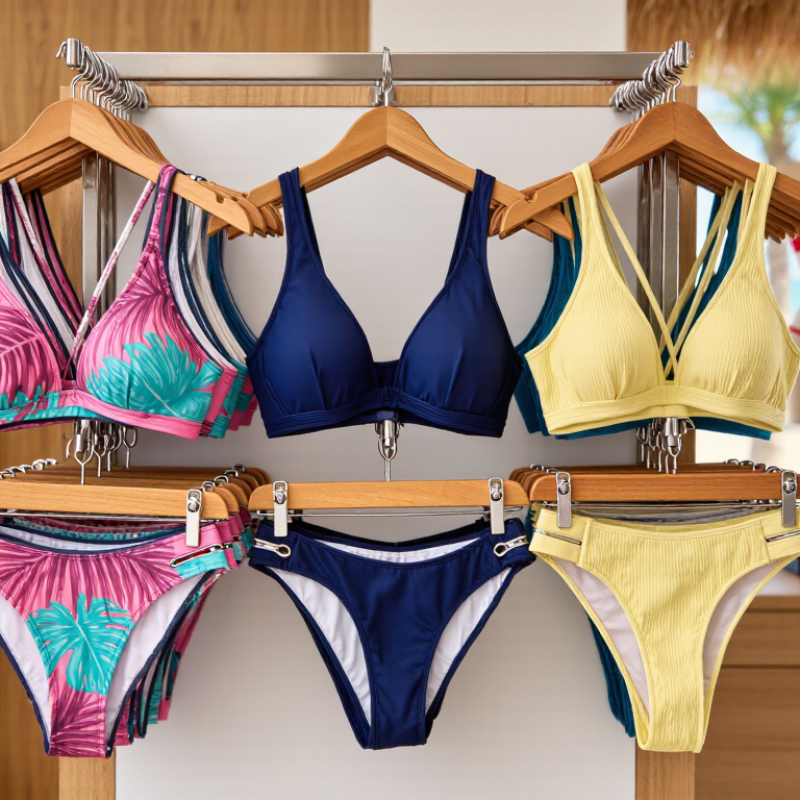
How to Find the Best Bikinis for Your Store
Define Your Store’s Customer Profile and Market Needs
Start with real evidence. Review sales records, customer questions, return reasons, and website searches before choosing styles. Note who shops with you, what they need, and what they consider a fair price. A college town may favor affordable mix-and-match pieces, while a resort area may see more demand for supportive suits and cover-ups. These are clues, not rules.
Fit matters. Ask customers which cuts feel secure, where straps dig in, and whether they want more coverage. Track requests across sizes, including less common ones; a size range that looks broad on paper may still leave gaps in actual fit. Consider fabric opacity when wet, adjustable straps, lining, and clear care instructions. Small details can prevent disappointment.
Use local climate and shopping patterns to guide timing and inventory depth. If warm weather starts early, bring in core styles sooner; if demand is brief, test smaller quantities first. A common buying mistake is ordering too deeply based on one popular color or a single busy weekend. This profile will never be perfect. Revisit it as feedback and sell-through data change, and be willing to revise your assumptions.
Define your store’s customer profile and market needs
Start by learning who your customers are, then stock around the needs they describe—such as reliable fit, size inclusivity, preferred coverage, and price. Scores are an illustrative planning rubric, not market survey results; validate priorities with customer feedback and your own sales data.
Compare bikini styles by the fit problem each one solves. Triangle tops suit customers who want adjustable ties, while underwire and longline tops offer more structure. High-waisted bottoms provide fuller coverage; cheeky cuts show more skin. The Grand View Research Swimwear Market report estimated the global market at USD 20.7 billion in 2023 and forecast 5.1% annual growth through 2030. That points to opportunity, not a guarantee of sales. Test styles with different fabrics and support levels before committing to deep stock.
Size range matters as much as silhouette. Review each supplier’s actual garment measurements, not just labels. A medium in one cut may fit differently in another. Check bust, waist, and hip measurements, plus strap adjustability and torso length for one-piece options. Offer a broad range where demand supports it, and track exchanges by style and size. No chart is perfect. Customer feedback can reveal where the fit notes are unclear, or where a cut simply does not work for enough shoppers.
Tips: Order samples across several sizes. Check coverage while sitting, bending, and moving. Note any rolling seams or slipping straps. A small fit test can prevent a large mismatch.
When assessing bikini samples, handle them as customers will. Stretch the fabric gently in both directions, then release it. Does it recover, or stay wavy? Feel for a smooth surface and consistent thickness, especially around the bust and seat. A soft hand can be appealing, but it does not prove durability. Check the fabric composition and ask suppliers for test records covering colorfastness, stretch recovery, and resistance to chlorine or saltwater. Results matter more than confident claims. One sample is not enough.
Construction deserves the same close attention. Examine seam lines for skipped stitches, loose threads, and puckering; pull lightly at straps and closures. Lining should sit flat without twisting, and removable cups should stay in place during movement. Small flaws show up quickly under bright store lighting. Review care labels, fiber information, and applicable product standards for each market where you plan to sell. Requirements can vary, so confirm details with qualified testing providers rather than relying on a generic checklist. Keep notes by style and size. I have found that this process can feel overly cautious, and it still cannot predict every customer’s experience, but consistent checks make quality issues easier to spot before ordering at scale.
A strong bikini supplier should provide more than attractive catalog photos. Request samples in several sizes, then inspect lining opacity, seam stretch, cup stability, and how hardware feels against wet skin. Check whether the sample matches the production specification; small changes in fabric weight can affect fit and returns. Grand View Research estimated the global swimwear market at USD 20.7 billion in 2023, projecting 5.1% annual growth from 2024 to 2030. That signals opportunity, not guaranteed sales. Test a small, balanced size run before committing to deep inventory.
Compare landed cost, not just unit price. Include freight, duties, packaging, inspection fees, and any charges for custom colors. Ask for minimum order quantities, production lead times, reorder availability, defect remedies, and payment milestones in writing. The NRF and Appriss Retail’s 2024 report estimated that returns would equal 16.9% of U.S. retail sales that year. It covers retail broadly, not swimwear alone, but it highlights why clear size charts and dependable quality matter. Get the supplier’s measurement tolerances and return or replacement terms on record. Test communication, too. A slow answer before payment may be a warning, though I have sometimes judged too quickly. Keep a little room for doubt.
Before committing to a bikini order, request samples in several sizes and colors. Lay each piece flat and inspect the stitching, lining, adjustable straps, and closures. Hold the fabric near a bright window to check for sheerness. Notice whether seams twist or edges dig in. Small flaws are easier to catch on a sample than after a full delivery arrives.
Test samples in realistic conditions: move, sit, and rinse them according to their care instructions. Check whether the fabric keeps its shape and whether colors transfer or fade. Compare garment measurements with the size chart, and record fit feedback from people with different body shapes. One sample has limits. It cannot show how every size will fit, so request a graded size set when possible. I would also leave room to revise an initial judgment; a striking print can distract from an uncomfortable cut.
Build the assortment around varied needs, not just a wall of similar styles. Include different levels of coverage, supportive details, adjustable features, and a mix of versatile colors and prints. Keep enough depth in the sizes customers request most, using sales records rather than guesswork. Review returns and customer comments regularly. A balanced range takes adjustment. Some choices will miss.
Triangle tops offer adjustable ties, while underwire and longline tops provide more structure. High-waisted bottoms offer fuller coverage; cheeky cuts show more skin.
Check bust, waist, and hip measurements against each garment’s chart. For one-pieces, also check torso length and strap adjustability. Labels can mislead.
Sit, bend, and move in each sample. Watch for slipping straps, rolling seams, or edges that dig in. Small tests help.
Inspect stitching, lining, straps, and closures. Hold fabric near a bright window to check for sheerness. Look for twisted seams.
Follow the care instructions, then check whether the fabric keeps its shape. Notice any color fading or transfer after rinsing. Results may vary.
No. One sample cannot show how every size fits, so request a graded size set when possible. Prints can distract from an uncomfortable cut.
Include varied coverage, support, and adjustable features, alongside versatile colors and prints. Keep more stock in sizes supported by sales records.
Track exchanges by style and size, and review customer comments regularly. Feedback can reveal unclear fit notes or cuts that miss the mark. Some choices will need revision.
A report estimated the global market at USD 20.7 billion in 2023, with 5.1% annual growth forecast through 2030. That suggests opportunity, not guaranteed sales.
Finding the best Bikinis for your store starts with understanding who your customers are and what they want, including their preferred styles, price points, and fit needs. Compare cuts, support, coverage, and size ranges to create options for different body types and shopping preferences. Pay close attention to fabric quality, stitching, lining, and overall construction so each item feels comfortable and holds up to regular use.
Next, assess potential suppliers by reviewing product consistency, pricing, minimum order quantities, delivery schedules, and return or quality policies. Request samples before committing to a larger order, and check their fit, finish, and materials in person. Use what you learn to build a balanced assortment with a thoughtful mix of styles, sizes, colors, and price levels. A careful selection process can help your store offer appealing swimwear while managing inventory and meeting customer expectations.