Choosing a manufacturing partner in China can shape the fit, finish, cost, and delivery of a swimwear line. For global buyers, comparing factories takes more than browsing product photos. A Custom Bikini should match its design brief, intended market, and expected quality level. Small details matter. Strap placement, lining coverage, and elastic recovery can change how a piece feels after repeated wear.
This guide explores manufacturers through practical criteria, including pattern development, fabric options, sample quality, minimum order quantities, and communication. A clear sampling process helps buyers check measurements, stitching, color, and hardware before approving bulk production. Ask how the factory handles revisions and what information it needs to quote accurately. Details such as fabric composition and size grading deserve written confirmation, not assumptions.
A polished catalog is not proof of consistent production. Buyers should request relevant samples, review specifications, and discuss lead times and inspection arrangements before placing an order. Where possible, compare the approved sample with finished goods using the same measurements and construction notes. Fit is personal. Even a careful process can miss something, and overseas communication may add delays. That is worth acknowledging. The sections ahead offer a grounded framework for assessing Chinese bikini manufacturers, asking better questions, and choosing a supplier whose capabilities fit the project. The goal is not to promise a perfect partnership, but to make the decision more informed and less dependent on attractive claims.
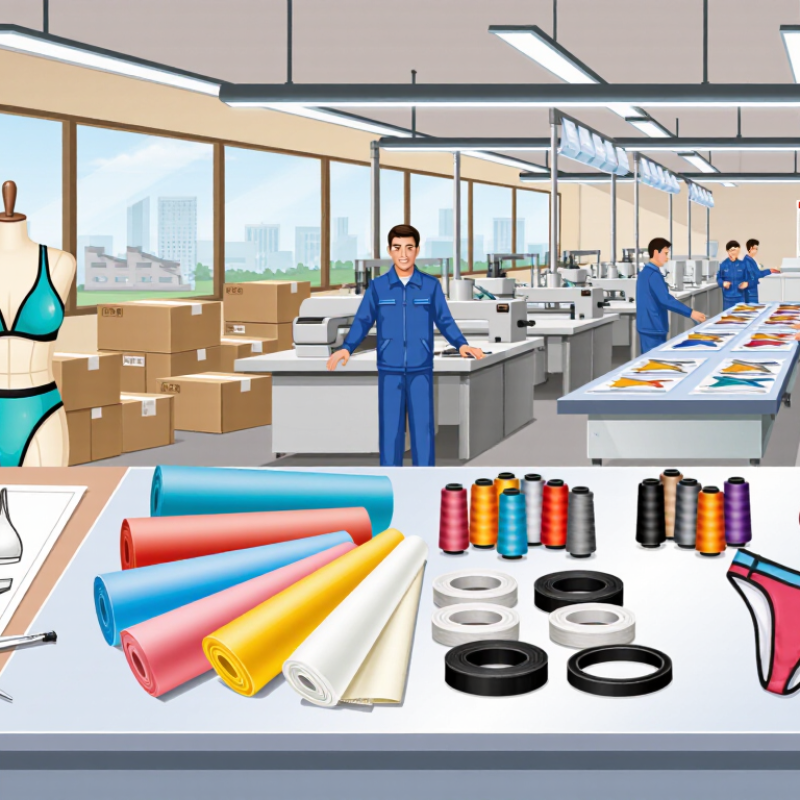
China’s custom bikini manufacturing industry combines fabric sourcing, pattern development, sampling, and bulk production. Many factories work with nylon-spandex blends, recycled fibers, and different lining weights. The right fabric depends on stretch, opacity, drying time, and intended use. A swatch can feel soft yet become sheer when wet, so testing matters.
Custom work usually begins with a tech pack or a detailed discussion of measurements, colors, trims, and stitching. A physical sample helps buyers check fit, strap placement, and seam comfort before approving production. Small details count. A clasp that looks sturdy on a desk may feel awkward against the skin. Minimum order quantities, sampling fees, and production schedules vary by supplier, so buyers should confirm them in writing. Ask how fabric lots are checked and how defects are recorded. Clear answers are useful; vague promises are not.
Communication can be a real strength, but it is not automatic. Time zones and translated measurements sometimes cause avoidable revisions. Even a careful process can miss something, and a sample is not a guarantee that every finished piece will fit identically. Keep approved samples, measurement charts, and written change records. This takes extra time. It can prevent expensive surprises later.
When evaluating bikini manufacturers in China, ask for evidence, not polished sample-room promises. Request a development sample in your actual fabric, with lining, elastic, and hardware specified. Check stretch recovery, opacity when wet, seam strength, and color transfer. Small details matter. A suit can look perfect on a hanger and still sag after swimming.
Compare each supplier’s quality controls, production capacity, minimum order quantity, and lead time in writing. Ask how defects are recorded and corrected, and whether fabric lots can be traced to test reports. Textile Exchange’s Materials Market Report 2024 estimates that global fiber production reached 124 million tonnes in 2023, with polyester making up 57%. This makes clear material specifications and substantiated recycled-content claims important sourcing checks. Ask for documents tied to the exact fabric, not a generic certificate.
Assess communication with a small pilot order before committing to larger volumes. Review fit comments, revised samples, packaging, and shipment updates for consistency. The World Bank’s 2023 Logistics Performance Index covered 139 economies; delivery reliability can vary across shipping routes and service providers. Confirm the factory’s production location, inspection timing, and agreed handover point. One weakness: a single successful sample does not prove repeatability. Recheck measurements and workmanship during bulk production, and leave time for corrections.
Chinese bikini manufacturers commonly support fabric selection, pattern development, sample making, size grading, and private-label details. Buyers can request adjustable straps, removable cups, lining, printed fabrics, and custom hardware. Ask for a physical sample before approving bulk production. A smooth-looking sample can still fit differently after grading.
Material choices deserve careful review. Textile Exchange’s Materials Market Report 2024 estimates that global fiber production reached 124 million tonnes in 2023, with polyester making up about 57%. For swimwear, suppliers can explain fabric weight, stretch recovery, lining, and colorfastness, but buyers should confirm test methods and results. Small details matter: check seam tension, cup placement, and whether pale fabric becomes transparent when wet.
Useful services may include digital patterns, fit revisions, label and packaging customization, and pre-shipment inspection. Share a clear measurement chart and reference photos; vague briefs often lead to costly revisions. Request written details on minimum order quantities, sample fees, production timelines, and defect handling. One weakness remains: a single fit model cannot represent every body shape. Test across several sizes when the budget allows, and keep a record of approved changes.
When comparing custom bikini manufacturers in China, global buyers should look beyond sample appearance. A smooth finish matters. So does repeatability. Request a written quality plan covering fabric inspection, shade matching, seam strength, elastic recovery, and finished measurements. Ask how workers record defects and whether inspections happen during sewing, not only before packing. For swimwear, check chlorine resistance, colorfastness, and stretch after repeated use. Review the test method, sample size, and report date; a report without these details offers limited evidence.
Production capability should match the order, not just a factory’s advertised capacity. Confirm minimum quantities, material sourcing, pattern development, size grading, sample rounds, and realistic lead times. Provide a clear tech pack with measurements, tolerances, lining placement, and approved trims. Compliance needs careful checking. Ask for current documents relevant to the destination market, such as chemical-testing results, labeling procedures, and social-audit records. Verify the issuing organization, scope, and expiry date independently. Requirements differ by market and product, so buyers may need qualified local advice.
A factory tour or video call can show cutting tables, sewing lines, and packing controls, but it cannot prove every claim. No checklist catches everything. Compare pre-production samples with bulk goods, and keep dated approval records. Timelines can slip when custom fabrics arrive late. Build in a buffer, and agree on how changes are approved before production starts.
Buyer-focused comparison criteria for assessing custom swimwear suppliers. Standards below describe test methods or regulatory requirements; they do not imply that any particular supplier is certified or compliant. Confirm product-specific requirements and results before placing an order.
| Evaluation Area | Relevant Standard or Reference | What to Verify with the Supplier | Buyer-Focused Assessment |
|---|---|---|---|
| Fabric and trim selection | Fibre composition and material specifications; OEKO-TEX® STANDARD 100, where applicable | Request fabric composition, weight, stretch and recovery details, lining options, and current test documentation for the exact material and product scope. | Check that the approved fabric, lining, elastic, thread, and hardware match the production order. |
| Colourfastness | ISO 105-E03 (chlorinated water); ISO 105-E02 (seawater); ISO 105-X12 (rubbing) | Ask for test reports for the selected fabric and colour. Agree on acceptance criteria with the supplier before testing. | Prioritize chlorine, seawater, and wet-rubbing performance for swimwear intended for pool or beach use. |
| Fit, stretch, and construction | Buyer-approved tech pack, measurement chart, and sealed fit sample | Review grading rules, seam construction, elastic placement, lining coverage, and fit samples across the agreed size range. | Set tolerances and written approval points; sizing and fit are product-specific and should not be assumed from a sample in one size. |
| Chemical and market compliance | Applicable destination-market rules, such as EU REACH restrictions; OEKO-TEX® STANDARD 100 is a voluntary textile product label | Identify the sales markets and product scope, then request relevant test reports or declarations for the actual materials and finished product. | A material certificate or supplier declaration does not automatically establish compliance for every finished product or market. |
| Fibre and care labeling | EU Regulation (EU) No 1007/2011 for textile fibre names and composition; applicable local care-label rules | Confirm label language, fibre-content wording, care instructions, country-of-origin details, and any required product information for each destination market. | Have a qualified compliance contact review final artwork and labeling requirements before bulk production. |
| Quality management | ISO 9001 specifies requirements for a quality management system; it is not a garment-performance certification | If certification is claimed, check the certificate’s validity, scope, and issuing body. Ask how incoming materials, in-line checks, and final inspections are documented. | Evaluate the supplier’s actual inspection records and corrective-action process, not the certificate claim alone. |
| Social and workplace assessment | Buyer-specific code of conduct and recognized social-audit programs, where required | Confirm the audited site, audit date, scope, findings, and corrective-action status; verify that the production facility matches the one being assessed. | Audit results are time- and site-specific; they are not a guarantee of ongoing performance. |
| Sampling and customization | Approved tech pack, artwork, material swatches, and pre-production sample | Ask whether the supplier can support custom prints, colourways, trims, packaging, and fit revisions; confirm sample charges and revision limits in writing. | Approve a complete pre-production sample before authorizing bulk production. |
| MOQ and production capacity | Supplier-specific; depends on style, fabric, colour, print method, and order mix | Request written MOQ by style and colour, available monthly capacity, production schedule, and any fabric or trim minimums. | Do not rely on generic market averages; confirm capacity and delivery dates for the exact order. |
| Final inspection and shipment | Written purchase specifications and agreed inspection plan | Define defect categories, measurement checks, quantity verification, packaging requirements, and when inspection will take place. | Use documented acceptance criteria and resolve non-conformities before shipment. |
Managing an order with a custom bikini manufacturer in China begins with a clear, version-controlled specification sheet. Include fabric composition, lining, color references, size measurements, stitching details, labels, and packaging. Send a complete size set for review, not just one sample. Approve the fit sample and fabric color under consistent lighting before bulk production. Keep written records of revisions, sample approvals, quantities, and agreed delivery dates. It sounds obvious. It is easy to miss one detail when messages cross time zones. A short weekly update can clarify what is finished, what is delayed, and who needs to act.
Plan shipping before production ends. Ask for carton dimensions, gross weight, packing details, and the estimated ready date so your freight provider can compare options. Confirm the shipping terms, export paperwork, and destination requirements with the supplier and logistics provider; responsibilities can vary by agreement. Build in time for inspection and transport delays, especially around busy shipping periods. A pre-shipment check can compare finished pieces against the approved sample and measurement chart. Keep a small buffer in your launch schedule. It may feel inefficient, but a missed sailing can cost more than a few extra days. Supplier relationships also improve when feedback is specific: share photos, identify the affected measurement, and agree on a correction deadline. Mistakes happen. Clear follow-up makes them easier to resolve.
Include measurements, colors, trims, stitching, lining placement, and tolerances. Clear details can prevent avoidable revisions.
A soft swatch may turn sheer when wet. Check stretch, opacity, drying time, chlorine resistance, and colorfastness on samples.
Check fit, strap placement, seam comfort, and how clasps feel against skin. Small details matter.
No. Finished pieces may vary slightly. Compare bulk goods with the approved sample and keep dated records.
Ask about fabric inspection, shade matching, seam strength, elastic recovery, and finished measurements. Request defect records and sewing-stage inspections.
Confirm minimum quantities, sample rounds, size grading, material sourcing, and realistic lead times. Advertised capacity is not enough.
Request current chemical-testing results, labeling procedures, and social-audit records where relevant. Independently verify the issuer, scope, and expiry date.
No. A tour may show cutting tables, sewing lines, and packing controls, but it cannot verify every detail. I would still want written evidence.
China’s custom bikini manufacturing industry offers global buyers a range of production options, from small-batch development to larger-scale orders. Choosing a suitable supplier involves assessing experience, communication, sampling processes, production capacity, pricing transparency, and the ability to meet delivery expectations. Buyers should also clarify fabric choices, sizing, colors, prints, trims, labels, and packaging early in the development process so that the finished products align with their requirements.
Before placing an order, confirm how the manufacturer manages quality checks, material specifications, and relevant compliance documentation. Clear agreements on samples, lead times, payment milestones, shipping arrangements, and procedures for handling production issues can help reduce misunderstandings. Maintaining regular communication and reviewing progress at key stages also supports a more reliable supplier relationship. With careful evaluation and well-defined expectations, global buyers can work with Chinese manufacturers to develop custom bikini collections that meet their design, quality, and operational needs.